Sustainability Reporting
Sustainability Reporting Services That Drive Real Business Value
Why Sustainability Reporting Has Become Non-Negotiable
The conversation around corporate sustainability has shifted dramatically over the past decade. What began as a voluntary exercise in corporate responsibility has evolved into a fundamental expectation from investors, regulators, customers, and employees alike. Organizations that once viewed sustainability reporting as a box-ticking exercise now recognize it as a strategic tool that shapes market positioning, risk management, and long-term profitability.
I’ve spent years working across manufacturing floors, hospitality operations, and service sector boardrooms in multiple countries. Through this work, one pattern has become unmistakably clear: companies that approach sustainability reporting with genuine commitment consistently outperform those that treat it as an afterthought. The data supports this. Stakeholders can distinguish between organizations making authentic progress and those producing glossy reports with little substance behind them.
The challenge most businesses face isn’t a lack of willingness—it’s knowing where to begin. Global ESG requirements continue to multiply and evolve. Frameworks compete for attention. Data collection feels overwhelming. Regulatory deadlines loom. This is precisely where experienced guidance makes the difference between a sustainability program that creates value and one that simply consumes resources.
What Is Sustainability Reporting?
At its core, sustainability reporting is the practice of measuring, disclosing, and being accountable for organizational performance across environmental, social, and economic dimensions. It provides stakeholders with a transparent view of how a company manages its impacts on the world and how external sustainability factors affect the business itself.
Unlike traditional financial statements that focus exclusively on monetary performance, non-financial disclosure captures the broader picture of organizational health. This includes everything from greenhouse gas emissions and water consumption to employee welfare, supply chain practices, and board diversity. Sustainability reporting translates these complex, interconnected factors into structured information that stakeholders can evaluate and compare.
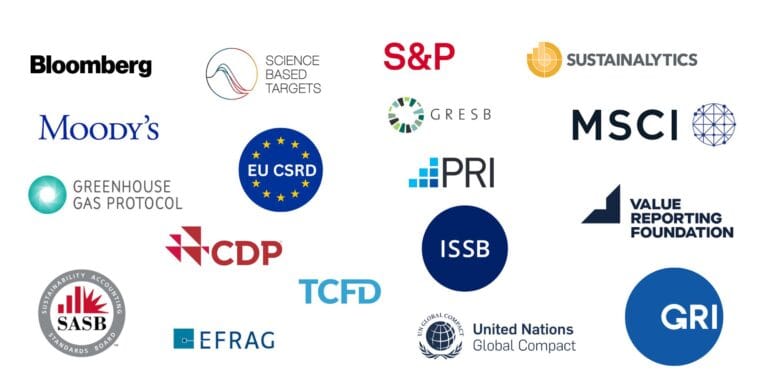
The practice has matured considerably since its early days. Modern sustainability performance measurement draws on established sustainability frameworks such as the Global Reporting Initiative (GRI), the Sustainability Accounting Standards Board (SASB), the Task Force on Climate-related Financial Disclosures (TCFD), and increasingly, the standards emerging from the International Sustainability Standards Board (ISSB). Each framework serves different purposes and audiences, and understanding which combination suits your organization requires careful consideration of your industry, geography, and stakeholder expectations.
Why Businesses Need Sustainability Reporting Today
The Regulatory Landscape Has Fundamentally Changed
Five years ago, sustainability reporting remained largely voluntary in most jurisdictions. That era has ended. The European Union’s Corporate Sustainability Reporting Directive (CSRD) now mandates detailed environmental reporting, social reporting, and governance reporting for thousands of companies operating in or selling to European markets. Similar requirements are emerging across Asia-Pacific, the Americas, and the Middle East.
Sustainability compliance is no longer optional for organizations of significant size or market presence. Even businesses not directly covered by current regulations often find themselves pulled into reporting through supply chain requirements. Major corporations increasingly require sustainability data from their suppliers, effectively extending reporting obligations far beyond the entities named in legislation.
Investors Demand Transparency
The investment community has moved decisively toward integrating ESG metrics into valuation models and allocation decisions. Asset managers controlling trillions of dollars now routinely screen investments based on sustainability performance. Poor ESG ratings can restrict access to capital, increase borrowing costs, and limit partnership opportunities.
This isn’t a temporary trend. The structural shift toward sustainable investment reflects both changing societal values and a growing recognition that sustainability risks represent material financial risks. Climate reporting, in particular, has become central to how investors assess long-term business viability.
Customers and Employees Expect Accountability
Consumer research consistently shows that purchasing decisions increasingly reflect sustainability considerations, particularly among younger demographics. Business-to-business relationships follow similar patterns—procurement teams evaluate potential suppliers on their environmental and social credentials alongside traditional factors like price and quality.
Talent acquisition and retention have become equally tied to corporate sustainability. Skilled professionals, especially in competitive fields, gravitate toward employers whose values align with their own. Organizations with credible sustainability programs enjoy advantages in attracting and keeping high-performing employees.
Risk Management Requires Visibility
You cannot manage what you do not measure. Sustainability reporting creates the visibility necessary to identify and address risks before they escalate into crises. Whether the concern involves supply chain disruptions from climate events, regulatory penalties for emissions violations, or reputational damage from labor practices in the value chain, systematic reporting provides the early warning systems that enable proactive response.
The Sustainability and ESG Reporting Process: From Strategy to Disclosure
Understanding how sustainability reporting actually works—from initial planning through final publication—helps organizations approach the process with realistic expectations and proper preparation. Whether following GRI Standards, IFRS Sustainability Disclosure Standards, SASB, TCFD recommendations, or regional frameworks, the fundamental process shares common stages that I guide clients through systematically.
Stage 1: Establishing Reporting Foundations
Every credible sustainability report begins with groundwork that shapes everything that follows. This foundational stage involves several critical decisions.
Defining Report Boundaries
Determining which entities, operations, and activities fall within the scope of your sustainability reporting requires careful consideration. For organizations with subsidiaries, joint ventures, or complex ownership structures, boundary decisions directly affect what gets measured and disclosed. GRI reporting standards provide specific guidance on consolidation approaches, while IFRS sustainability standards align reporting boundaries with financial statement consolidation. Getting boundaries right from the start prevents complications later when stakeholders question why certain operations appear excluded.
Selecting Appropriate Frameworks
The sustainability frameworks landscape has grown increasingly complex. GRI Standards remain the most widely adopted framework globally, offering comprehensive coverage across environmental, social, and governance topics with detailed disclosure requirements. IFRS Sustainability Disclosure Standards (building on SASB and TCFD foundations) focus specifically on sustainability matters affecting enterprise value—making them particularly relevant for investor-focused ESG reporting. Many organizations now report against multiple frameworks simultaneously, requiring careful mapping to avoid duplication while ensuring each framework’s requirements receive adequate attention.
- Building Internal Governance. Effective sustainability reporting demands clear internal ownership and accountability. This means identifying who holds responsibility for overall report quality, who provides data from various business functions, who reviews and approves disclosures, and how the sustainability reporting process connects to board-level governance reporting. Organizations without established governance structures often struggle with data quality issues and inconsistent messaging that undermine report credibility.
Stage 2: Materiality Assessment
Materiality assessment determines which sustainability topics warrant inclusion in your report. This isn’t simply a matter of preference—it represents a structured process for identifying issues that genuinely matter to your organization and stakeholders.
Double Materiality Considerations
Modern sustainability reporting increasingly embraces double materiality, examining both how sustainability issues affect your organization (financial materiality) and how your organization affects society and the environment (impact materiality). European regulations under CSRD mandate double materiality assessment, while IFRS standards focus primarily on financial materiality. Understanding which materiality lens applies to your reporting obligations prevents misaligned effort.
Stakeholder Engagement.
Credible materiality assessment incorporates perspectives from stakeholders who are affected by or have influence over your organization. This includes investors, employees, customers, suppliers, communities, and regulators. The depth of engagement varies based on organizational resources and stakeholder expectations—ranging from surveys and interviews to formal dialogue sessions. What matters is demonstrating that materiality conclusions reflect genuine stakeholder input rather than internal assumptions alone.
Prioritization and Documentation
Materiality assessment produces a prioritized list of topics for reporting focus. Documentation of the assessment process—including methodology, stakeholders consulted, criteria applied, and rationale for conclusions—provides the audit trail that external assurance providers and sophisticated stakeholders expect to see. This documentation also creates a baseline for future assessments, allowing organizations to track how material topics evolve over time.
Stage 3: Sustainability Strategy Alignment
With material topics identified, the reporting process should connect to broader sustainability strategy. Reports that simply catalog data without strategic context miss opportunities to communicate organizational direction and commitment.
Setting Targets and Commitments
Stakeholders increasingly expect sustainability reports to include forward-looking targets alongside historical performance data. Science-based targets for carbon reporting have become particularly prominent, with organizations committing to emissions reductions aligned with climate science. Targets should be specific, measurable, time-bound, and connected to material topics—vague aspirations without concrete metrics undermine credibility.
Connecting to Business Strategy
The most effective sustainability reports demonstrate how sustainability strategy integrates with overall business strategy rather than existing as a separate initiative. This means explaining how sustainability performance affects competitive positioning, risk management, operational efficiency, and long-term value creation. ESG reporting that treats sustainability as disconnected from core business concerns fails to resonate with investors who evaluate companies holistically.
Stage 4: Data Collection and Management
Data quality determines report credibility. This stage typically consumes the most time and resources, particularly for organizations early in their reporting journey.
Establishing Data Requirements
Each framework specifies particular metrics and disclosures. GRI Standards define specific indicators for each topic, from Scope 1, 2, and 3 emissions calculations under GRI 305 to diversity metrics under GRI 405. IFRS standards include industry-specific metrics drawn from SASB’s industry standards. Mapping these requirements against your material topics produces a comprehensive data collection plan.
Building Collection Systems
Effective ESG data management requires systematic processes that can be repeated reliably each reporting period. This involves identifying data sources across the organization, establishing collection protocols, defining calculation methodologies, and implementing quality control procedures. Organizations reporting carbon footprint data, for example, need consistent approaches to activity data collection, emission factor selection, and uncertainty management that align with GHG Protocol requirements.
Addressing Data Gaps
First-time reporters commonly discover gaps between available data and framework requirements. Responsible reporting acknowledges these limitations transparently rather than forcing incomplete data into required formats. Reports should explain what data gaps exist, why they exist, and what plans are in place to address them in future reporting cycles. This honest approach builds more stakeholder trust than superficially complete reports with questionable underlying data.
Internal Validation
Before data enters the report, validation processes catch errors and inconsistencies. This includes checking calculations, comparing current period data against historical trends to identify anomalies, reconciling sustainability data with financial records where overlaps exist, and obtaining sign-off from data owners who can verify accuracy. Robust validation significantly reduces issues discovered during external assurance.
Stage 5: Report Development
With validated data in hand, report development transforms raw information into coherent narrative and structured disclosure.
Narrative Development
Numbers alone don’t tell your sustainability story. Effective sustainability reports combine quantitative metrics with qualitative explanations that provide context, describe management approaches, and explain performance trends. The narrative should address why performance changed from prior periods, what initiatives drove improvements or caused setbacks, and what the organization plans to do going forward. This requires input from subject matter experts across the organization, not just the sustainability team.
Framework Compliance
Reports claiming alignment with specific frameworks must meet their requirements comprehensively. For GRI reporting, this means addressing all applicable disclosure requirements for material topics, not cherry-picking favorable metrics. GRI’s content index provides a roadmap for demonstrating compliance. IFRS standards similarly require complete disclosure against applicable requirements. Partial compliance should be explicitly acknowledged rather than obscured.
Visual Design and Accessibility
Sustainability reports serve multiple audiences with different needs and expertise levels. Effective design makes reports navigable and accessible—using clear structure, appropriate visualizations for data presentation, and plain language explanations of technical concepts. Reports buried in jargon or presented as walls of text fail to communicate effectively regardless of their substantive quality.
Stage 6: Assurance and Verification
External assurance provides independent validation that enhances report credibility. While not universally required, assurance has become increasingly common and is mandated under certain regulations.
- Selecting Assurance Scope — Organizations can pursue assurance over the full report or selected sections. Many begin with limited assurance over key metrics—particularly environmental reporting data like greenhouse gas emissions—before expanding scope in subsequent years. Assurance over high-priority ESG metrics often delivers the greatest credibility benefit relative to cost.
- Preparing for Assurance — Assurance providers examine not just reported data but the processes that produced it. This means documentation of methodologies, evidence supporting data points, and records demonstrating internal controls must be organized and accessible. Organizations unprepared for assurance scrutiny face uncomfortable findings that can delay report publication or require restatement of metrics.
- Responding to Findings — Assurance engagements typically produce findings beyond the final assurance opinion—observations about control weaknesses, data quality issues, or opportunities for improvement. Treating these findings as valuable input for strengthening sustainability performance measurement, rather than unwelcome criticism, maximizes the benefit of assurance investment.
Stage 7: Publication and Communication
Report publication marks a milestone but not an endpoint. Strategic communication ensures reports reach intended audiences and achieve their purpose.
- Distribution Strategy — Different stakeholders access sustainability information through different channels. Investors may review reports through ESG data platforms, customers through corporate websites, employees through internal communications. Effective distribution strategies ensure reports and key messages reach each audience through appropriate channels.
- Stakeholder Dialogue — Publication creates opportunities for stakeholder engagement. This includes responding to questions about report content, participating in ESG rating agency assessments that draw on reported information, and gathering feedback that informs future reporting cycles. Organizations that publish and move on miss valuable opportunities to demonstrate transparency and responsiveness.
Stage 8: Continuous Improvement
Each reporting cycle generates lessons that strengthen subsequent reports. Building continuous improvement into the sustainability reporting process ensures capabilities mature over time.
- Post-Cycle Review — After publication, review what worked well and what proved challenging. Where did data collection bottlenecks occur? What stakeholder feedback requires response? Which disclosures generated the most questions? Documenting these observations while they remain fresh prevents repeating avoidable problems.
- Evolving Requirements — Sustainability frameworks and global ESG requirements continue developing. GRI regularly updates standards. IFRS is expanding its sustainability disclosure standards. Regional regulations impose new requirements. Effective sustainability compliance requires ongoing monitoring of developments and proactive preparation for emerging requirements rather than reactive scrambling when deadlines arrive.
- Raising Ambition — Beyond compliance, mature organizations use the reporting process to drive genuine sustainability performance improvement. This means setting more ambitious targets, expanding reporting boundaries to capture previously excluded impacts, and deepening disclosure quality. The goal isn’t simply meeting requirements—it’s using sustainability reporting as a tool for becoming a more sustainable organization.
Need sustainability support for your business?
I’m here to help you plan, measure, and grow responsibly.
Click below to get in touch or message me directly.
I’m Danushka Prabhad, a sustainability consultant with a M.Sc.’s in Environmental Science. I partner with businesses globally to turn ESG goals into practical action. From carbon footprint assessments to structured sustainability management systems, I help organizations build strategies that create lasting impact. My work is rooted in clarity, science, and real-world results — because sustainability shouldn’t be just an idea, but a measurable, strategic advantage.