
Environmental Product Declaration (EPD)
Environmental Product Declaration (EPD) Consultancy Services
Introduction to Environmental Product Declarations
An Environmental Product Declaration (EPD) is a standardized, independently verified document that communicates transparent and comparable information about the environmental performance of a product or service throughout its entire life cycle. Think of it as a comprehensive environmental passport for your product that speaks a universal language understood by green building professionals, procurement officers, and sustainability conscious buyers worldwide.
EPDs work by quantifying environmental impacts using Life Cycle Assessment (LCA) methodology. This means every stage is measured, from raw material extraction through manufacturing, transportation, use, and end of life disposal or recycling. The result is a credible, third party verified declaration that details impacts such as carbon footprint, water use, resource depletion, acidification potential, and several other environmental indicators.
For manufacturers, suppliers, exporters, and global buyers, EPDs have become essential business tools. They matter because modern procurement decisions are no longer based solely on price and quality. Today’s buyers demand environmental transparency. EPDs provide exactly that, offering standardized data that allows fair comparison between competing products. When a construction company in Germany evaluates insulation materials, or a furniture buyer in Canada assesses office systems, EPDs enable informed decisions based on verified environmental performance.
The value of EPDs extends far beyond compliance. They increase transparency by making environmental claims credible and defensible. They improve trust between suppliers and buyers by replacing vague marketing statements with hard data. They directly support green procurement policies that now govern billions of dollars in public and private spending. For exporters, EPDs enhance competitiveness in international markets where environmental documentation is increasingly mandatory. In the business to business space, having an EPD can be the deciding factor that wins or loses a major contract.
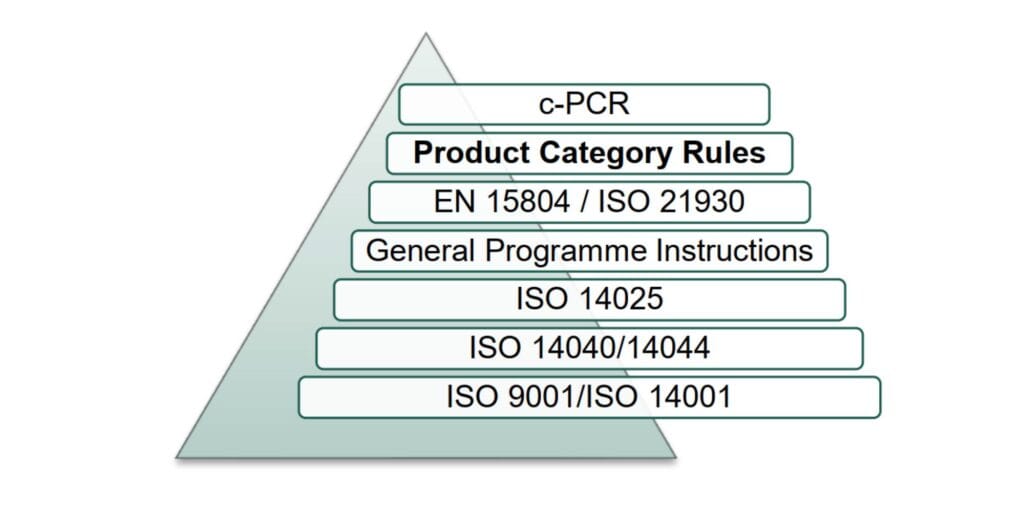
EPDs are built on a solid foundation of international standards. The core framework is ISO 14025, which defines the principles and procedures for Type III environmental declarations. For construction products, EN 15804 provides specific rules for EPDs in the building sector, while ISO 21930 serves a similar function for construction materials and sustainability in building construction. Every EPD must follow Product Category Rules (PCRs), which are sector specific guidelines ensuring comparability within product groups. The underlying LCA work follows ISO 14040 and ISO 14044, the global standards for life cycle assessment methodology. Together, these standards create a rigorous, credible system that gives EPDs their power and recognition.
Why EPDs Are Becoming Critically Important for Businesses Worldwide
The global marketplace is experiencing a fundamental shift toward low carbon products and verified environmental performance. This is not a trend. It is a structural transformation driven by regulation, investor pressure, and changing buyer expectations. EPDs sit at the center of this transformation.
Green building certifications have made EPDs increasingly essential. Programs like LEED (Leadership in Energy and Environmental Design) and BREEAM (Building Research Establishment Environmental Assessment Method) award valuable credits to projects that specify products with EPDs. These credits can determine whether a building achieves certification or reaches a higher rating tier. Architects, engineers, and contractors now actively seek products with EPDs because these documents directly contribute to project sustainability goals. Similar dynamics exist in other certification systems including Green Star in Australia, DGNB in Germany, and numerous national programs worldwide.
Procurement requirements in major markets have formalized the need for EPDs. The European Union is leading this shift. Public procurement rules in countries like the Netherlands, France, Sweden, and Denmark now require or strongly favor products with EPDs for construction and infrastructure projects. The EU’s Green Public Procurement criteria explicitly reference EPDs as proof of environmental performance. In North America, the trend is accelerating. The Canadian government has integrated EPDs into federal procurement policies. Several US states, including California, Washington, and New York, have enacted Buy Clean policies that require EPDs for certain construction materials in publicly funded projects. Australia and New Zealand are following similar paths, with EPDs becoming standard expectations in large scale infrastructure and commercial developments.
Multiple drivers are converging to make EPDs business critical. ESG reporting requirements now affect thousands of companies. Investors and stakeholders demand transparency on environmental impact, and EPDs provide exactly the kind of verified, standardized data that satisfies reporting frameworks like GRI, CDP, and TCFD. Client expectations have evolved. Large corporations with ambitious sustainability commitments now require their suppliers to provide environmental documentation. Without an EPD, you may not even make it onto the approved vendor list.
Scope 3 emissions transparency is another major driver. Companies reporting their full carbon footprint must account for emissions embedded in purchased goods and services. EPDs provide the product level data needed for accurate Scope 3 calculations. Supply chain pressure flows downward. When tier one suppliers face EPD requirements from their customers, they pass similar requirements to their suppliers. This cascade effect is bringing EPD expectations to businesses of all sizes across diverse sectors.
Beyond compliance, EPDs offer competitive advantages. They differentiate products in crowded markets. They demonstrate commitment to sustainability in a credible, verifiable way. They open doors to premium segments where environmental performance commands higher prices. For exporters, EPDs remove barriers to entry in environmentally conscious markets. For all businesses, EPDs build brand reputation and position companies as leaders rather than followers in the global transition to a low carbon economy.
EPD Creation Process: Step by Step
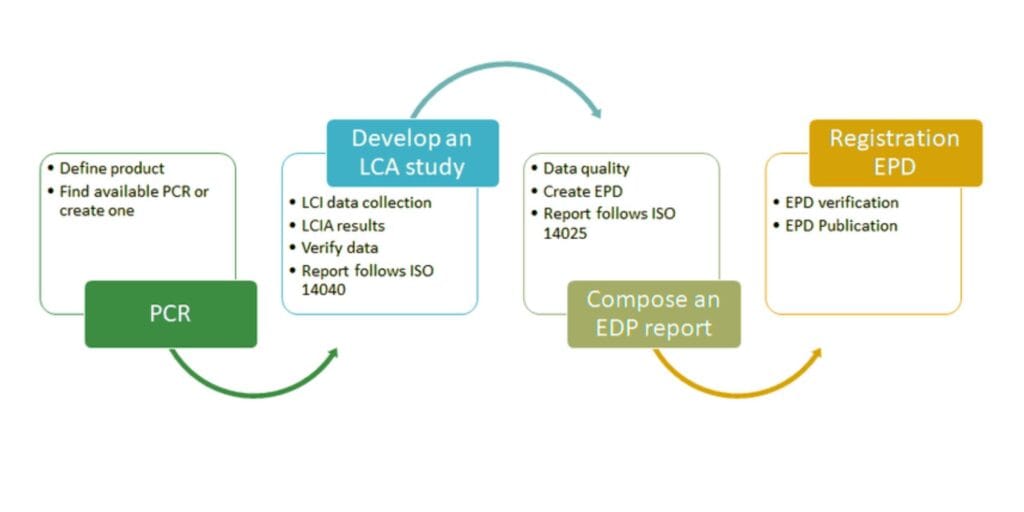
Creating an Environmental Product Declaration is a structured, multi stage process that combines technical rigor with careful documentation. Understanding each step helps you appreciate both the value of an EPD and the expertise required to produce one correctly.
Step 1: Defining Goal and Scope
The process begins by clearly defining what you want to achieve and the boundaries of your study. The goal statement explains the intended application, target audience, and reasons for creating the EPD. The scope defines which life cycle stages will be included. Will you assess cradle to gate (raw materials through factory gate), cradle to grave (including use and disposal), or cradle to cradle (including recycling and circular economy aspects)? You must also identify system boundaries, determining which processes and inputs are included or excluded, and justifying these decisions according to ISO standards.
Step 2: Identifying the Functional Unit
Every EPD must define a functional unit, which is the quantified performance of the product for use as a reference basis. For example, for paint, the functional unit might be coverage of one square meter of wall surface to a specified thickness. For flooring, it could be one square meter of installed floor with a defined service life. The functional unit enables fair comparison between different products that deliver the same function. Getting this right is crucial because all environmental impacts will be calculated relative to this unit.
Step 3: Selecting Appropriate Product Category Rules
Product Category Rules (PCRs) are sector specific instructions that ensure EPDs within the same product category follow consistent methodology. You must identify which PCR applies to your product by searching EPD program operator databases. If no suitable PCR exists, one may need to be developed, which adds time and complexity. PCR selection must happen early because it dictates many subsequent methodological choices.
Step 4: Life Cycle Inventory and Data Collection
This is often the most time intensive step. You must gather detailed data on all inputs and outputs throughout the product life cycle. This includes primary data from your own operations such as energy consumption, raw material quantities, water use, waste generation, and emissions. You will also need secondary data from databases like ecoinvent, GaBi, or industry averages for upstream processes like material production and transportation that occur outside your direct control. Data quality is critical. ISO 14044 requires that data be representative, complete, consistent, and reproducible.
Step 5: LCA Modeling and Inventory Analysis
Using specialized LCA software such as SimaPro, GaBi, or openLCA, you build a complete model of your product system. Each process is connected, showing flows of materials, energy, and emissions. The software calculates the cumulative inventory across all life cycle stages, summing inputs like fossil fuels and outputs like greenhouse gas emissions. This inventory becomes the foundation for impact assessment.
Step 6: Life Cycle Impact Assessment
The inventory data is translated into environmental impact indicators using characterization models. Common impact categories include climate change (measured in kg CO2 equivalent), acidification potential, eutrophication potential, ozone depletion, photochemical ozone creation, resource depletion, water scarcity, and primary energy demand from renewable and non renewable sources. The EPD will report results for all mandatory impact categories specified in the applicable PCR and relevant standards like EN 15804.
Step 7: Interpretation and Reporting
Results must be interpreted carefully, identifying significant impact contributors and assessing data quality and uncertainty. The EPD document is then drafted following the format and content requirements of ISO 14025, the chosen PCR, and the EPD program operator. This includes technical descriptions, system boundary diagrams, data quality statements, impact results, and additional environmental information. Clear communication is essential because EPDs serve diverse audiences with varying technical knowledge.
Step 8: Third Party Verification
Before publication, every EPD must undergo independent third party verification. An accredited verifier reviews the LCA study, checks compliance with ISO standards and PCRs, examines data quality and calculations, and verifies that all claims and results are accurate and supportable. The verifier may request corrections or additional documentation. This critical quality control step ensures credibility and prevents greenwashing.
Step 9: Registration and Publication
Once verified, the EPD is registered with an EPD program operator such as EPD International, IBU (Institut Bauen und Umwelt), UL Environment, or others depending on your target market. The operator assigns a registration number and publishes the EPD in their online database where it becomes publicly accessible. Most EPDs are valid for five years, after which they must be updated and reverified.

Why Creating an EPD Alone Is Difficult
Many manufacturers recognize the value of EPDs but underestimate the complexity of creating one without expert support. The challenges are real and substantial.
Technical understanding of LCA modeling represents a significant barrier. Life cycle assessment is a specialized discipline that requires training and experience. You need to understand process modeling, allocation procedures, system expansion, impact assessment methodologies, and sensitivity analysis. Most companies lack in house staff with this expertise. Sending someone to a training course helps, but proficiency comes only through practical application across multiple projects.
Data gaps and poor data quality plague many EPD attempts. Your internal operations may be well documented, but what about your suppliers? Obtaining specific data on raw materials, components, and packaging from upstream partners is often difficult or impossible. You face decisions about when to use primary data versus secondary data, how to estimate missing information, and how to document assumptions. Poor quality or incomplete data leads to EPDs that fail verification or, worse, provide misleading information.
Correct application of Product Category Rules is more challenging than it appears. PCRs contain detailed methodological requirements, specific data quality criteria, and mandatory reporting elements. Misinterpreting even small details can result in a non compliant EPD. Many PCRs reference additional technical specifications or use terminology that requires deep familiarity with LCA practice. Without experience, it is easy to make errors that only become apparent during verification, forcing time consuming revisions.
Lack of internal sustainability expertise affects most small and medium enterprises. Sustainability teams at large corporations may have dedicated LCA specialists, but SMEs rarely do. The person tasked with creating an EPD is often already handling quality, operations, or technical management. Learning LCA methodology, mastering software tools, navigating ISO standards, coordinating with verifiers, and managing program operator requirements on top of regular responsibilities is simply unrealistic.
Complex ISO requirements create additional hurdles. ISO 14040, 14044, and 14025 together span hundreds of pages of technical specifications. These standards use precise terminology and contain numerous conditional requirements depending on study type, boundary choices, and intended applications. Ensuring full compliance requires not just reading the standards but understanding how they interact and how to apply them to your specific product and situation.
Time and resource constraints make self directed EPD development difficult to sustain. A typical EPD project requires 150 to 400 hours of technical work spread over several months. This includes time for data collection, supplier coordination, LCA modeling, documentation, verification iterations, and program registration. For businesses focused on core operations, dedicating this level of effort to EPD development creates real opportunity costs and often leads to stalled projects.
The risk of rejection during verification is perhaps the most frustrating challenge. After investing months of effort and potentially purchasing expensive LCA software and databases, discovering that your EPD contains methodological errors or insufficient documentation means starting over or making major revisions. Verifiers rightfully maintain high standards, but without experienced guidance, many first time EPD creators face rejection or extensive correction requests that substantially delay completion.
Why Creating an EPD Alone Is Difficult
Many manufacturers recognize the value of EPDs but underestimate the complexity of creating one without expert support. The challenges are real and substantial.
Technical understanding of LCA modeling represents a significant barrier. Life cycle assessment is a specialized discipline that requires training and experience. You need to understand process modeling, allocation procedures, system expansion, impact assessment methodologies, and sensitivity analysis. Most companies lack in house staff with this expertise. Sending someone to a training course helps, but proficiency comes only through practical application across multiple projects.
Data gaps and poor data quality plague many EPD attempts. Your internal operations may be well documented, but what about your suppliers? Obtaining specific data on raw materials, components, and packaging from upstream partners is often difficult or impossible. You face decisions about when to use primary data versus secondary data, how to estimate missing information, and how to document assumptions. Poor quality or incomplete data leads to EPDs that fail verification or, worse, provide misleading information.
Correct application of Product Category Rules is more challenging than it appears. PCRs contain detailed methodological requirements, specific data quality criteria, and mandatory reporting elements. Misinterpreting even small details can result in a non compliant EPD. Many PCRs reference additional technical specifications or use terminology that requires deep familiarity with LCA practice. Without experience, it is easy to make errors that only become apparent during verification, forcing time consuming revisions.
Lack of internal sustainability expertise affects most small and medium enterprises. Sustainability teams at large corporations may have dedicated LCA specialists, but SMEs rarely do. The person tasked with creating an EPD is often already handling quality, operations, or technical management. Learning LCA methodology, mastering software tools, navigating ISO standards, coordinating with verifiers, and managing program operator requirements on top of regular responsibilities is simply unrealistic.
Complex ISO requirements create additional hurdles. ISO 14040, 14044, and 14025 together span hundreds of pages of technical specifications. These standards use precise terminology and contain numerous conditional requirements depending on study type, boundary choices, and intended applications. Ensuring full compliance requires not just reading the standards but understanding how they interact and how to apply them to your specific product and situation.
Time and resource constraints make self directed EPD development difficult to sustain. A typical EPD project requires 150 to 400 hours of technical work spread over several months. This includes time for data collection, supplier coordination, LCA modeling, documentation, verification iterations, and program registration. For businesses focused on core operations, dedicating this level of effort to EPD development creates real opportunity costs and often leads to stalled projects.
The risk of rejection during verification is perhaps the most frustrating challenge. After investing months of effort and potentially purchasing expensive LCA software and databases, discovering that your EPD contains methodological errors or insufficient documentation means starting over or making major revisions. Verifiers rightfully maintain high standards, but without experienced guidance, many first time EPD creators face rejection or extensive correction requests that substantially delay completion.
How I Help as a Freelancing Sustainability Consultant
My approach to EPD consultancy is built on a foundation of formal education, practical experience, and a genuine commitment to making environmental transparency accessible to businesses of all sizes.
I hold an MSc in Environmental Science, which provided me with deep technical training in environmental assessment methodologies, including life cycle assessment, environmental impact evaluation, and sustainability metrics. This academic foundation ensures I understand not just the mechanics of EPD creation but the underlying environmental science and systems thinking that make EPDs meaningful.
With more than four years of professional sustainability experience working in Dubai and supporting clients internationally, I have developed expertise across the full spectrum of corporate sustainability. My experience includes conducting life cycle assessments for diverse products, creating Environmental Product Declarations for manufacturing clients, performing greenhouse gas inventories aligned with the GHG Protocol, supporting companies through EcoVadis assessments, and developing sustainability documentation for ESG reporting and compliance purposes. This breadth of experience means I understand how EPDs fit within broader sustainability strategies and can help you leverage your EPD investment across multiple business needs.
My global focus sets me apart from traditional consultancies tied to specific regions. I work remotely with clients worldwide, supporting manufacturers in Europe, North America, the Middle East, Asia Pacific, and emerging markets. I understand the different EPD program operators, regional PCR variations, and market specific requirements that affect international businesses. Whether you are exporting to the European Union, responding to Canadian procurement requirements, pursuing LEED projects in the United States, or supplying the Australian construction market, I can navigate the relevant standards and program operator requirements.
I take an education plus consulting approach. Rather than simply delivering a finished EPD as a black box, I involve my clients in the process, explaining key decisions, interpreting results, and building internal understanding. This approach ensures you can confidently communicate your EPD results to customers and leverage the insights gained for product improvement. Many clients tell me they appreciate this knowledge transfer because it builds lasting capability within their organization.
My specialty is working with small and medium enterprises. Large corporations can afford big consultancy firms with teams of specialists. SMEs need a different model. They need high quality technical work delivered efficiently at reasonable cost by someone who understands the unique constraints and priorities of smaller organizations. I simplify the entire EPD journey by handling technical complexity, managing program operator relationships, coordinating verification, and delivering clear documentation. You stay focused on your core business while I navigate the EPD process.
My service is remote friendly, cost effective, and focused on accuracy. Remote work eliminates travel costs and scheduling constraints, making expert support accessible regardless of location. My freelance model avoids the overhead of large consultancies, delivering professional services at prices that make sense for SMEs. Most importantly, I prioritize accuracy and compliance. Every EPD I support is built on sound methodology, complete documentation, and thorough verification readiness. The goal is not just to produce an EPD but to create a credible, defensible document that serves your business objectives for years to come.
My Scope of Work for EPD Consultancy
When you engage me for EPD consultancy services, you receive comprehensive support covering every aspect of the EPD development process. My scope of work includes the following deliverables and services:
Full Life Cycle Assessment Modeling
I conduct complete LCA modeling according to ISO 14040 and ISO 14044 standards using professional LCA software and recognized databases. This includes developing the product system model, establishing system boundaries, modeling all relevant life cycle stages from raw material extraction through end of life, and performing comprehensive life cycle inventory analysis and impact assessment calculations.
Product Category Rules Selection and Alignment
I identify the appropriate PCR for your product by searching EPD program operator databases and assessing applicability to your specific product characteristics. I ensure your EPD study design aligns with all PCR requirements including functional unit definition, system boundary specifications, data quality criteria, and mandatory reporting elements. If no suitable PCR exists, I can advise on PCR development options.
Primary and Secondary Data Collection Support
I guide you through the data collection process, providing templates and specifications for gathering primary data from your operations. I source high quality secondary data from reputable LCA databases for upstream and downstream processes. I help coordinate with suppliers when specific supplier data is needed and document all data sources, quality assessments, and assumptions according to ISO requirements.
Environmental Impact Calculation and Analysis
I calculate all mandatory environmental impact indicators specified by applicable standards and PCRs, typically including climate change, acidification, eutrophication, ozone depletion, photochemical ozone creation, abiotic resource depletion, water use, and primary energy demand. I provide clear interpretation of results, identifying key environmental hotspots and opportunities for improvement.
EPD Document Preparation and Drafting
I prepare the complete EPD document according to ISO 14025, EN 15804 (if applicable), relevant PCRs, and EPD program operator requirements. This includes all technical content, system descriptions, data quality statements, environmental impact results, additional environmental information, and required declarations. The document is produced in the format and language required by your target market and program operator.
Third Party Verification Support
I coordinate with independent verifiers approved by EPD program operators, prepare all supporting documentation required for verification review, respond to verifier questions and requests for clarification, and manage any necessary corrections or revisions. My verification ready approach minimizes review cycles and accelerates the verification process.
EPD Submission and Publication Support
I handle registration with your chosen EPD program operator, submit all required documentation and fees, ensure compliance with program operator procedures, and coordinate final publication in the program operator’s database. I provide guidance on EPD communication and marketing once your EPD is published.
Additional Complementary Services
Beyond core EPD development, I offer optional services that complement your EPD investment. These include greenhouse gas inventory development for corporate carbon footprinting aligned with the GHG Protocol, EcoVadis assessment support to improve sustainability ratings, development of environmental and sustainability policies, carbon footprint communication materials for marketing purposes, product environmental improvement recommendations based on LCA results, and ongoing support for EPD updates and renewals.
Each engagement is tailored to your specific needs. Some clients require full turnkey service where I manage everything from data collection through publication. Others have internal capability for certain steps and need targeted expert support for complex technical aspects. I am flexible and transparent about scope, timelines, and pricing so you know exactly what to expect.
Why Choose Me for Your EPD Consultancy Needs
Selecting the right consultant for your Environmental Product Declaration project is an important decision. Here is why businesses worldwide choose to work with me:
Global Freelance Availability
As an independent consultant, I am not limited by geography or time zones. I serve clients across Europe, North America, the Middle East, Asia Pacific, and beyond. My remote work approach means you get expert support regardless of your location. I am experienced with the EPD program operators, standards, and market requirements relevant to international trade, ensuring your EPD meets the expectations of your target markets whether you are selling into the EU, Canada, the United States, Australia, New Zealand, or other regions.
Transparent and Fair Pricing
My freelance model eliminates the overhead costs associated with large consultancies. You receive expert professional service without paying for corporate infrastructure, account management layers, or inflated markup. I provide clear upfront pricing based on project scope so there are no surprises. My rates are designed to be accessible for small and medium enterprises while reflecting the specialized expertise and attention to detail that credible EPD development requires.
Quick Turnaround Without Compromising Quality
I understand that timing matters. Whether you are responding to a customer request, pursuing a tender opportunity, or planning a product launch, delays can cost business. My focused, efficient approach typically delivers completed, verified EPDs in three to five months depending on data availability and verification scheduling. This is significantly faster than many firms while maintaining the technical rigor and accuracy that makes EPDs valuable.
Strong Communication and Collaboration
Working remotely requires excellent communication, and I prioritize keeping you informed throughout the project. You will receive regular updates, clear explanations of technical decisions, and prompt responses to questions. I use straightforward language rather than hiding behind jargon. My goal is that you understand your EPD results and feel confident discussing them with customers, and that requires clear, ongoing dialogue throughout our collaboration.
Technical Depth and Practical Experience
My MSc in Environmental Science combined with more than four years of professional practice means I bring both theoretical knowledge and real world problem solving ability to your project. I have worked across diverse product categories and industries, giving me the adaptability to understand your specific product and its environmental profile. I stay current with evolving standards, program operator requirements, and best practices through continuous professional development and active engagement with the LCA and EPD community.
SME Focused Approach
Large consultancies often treat smaller clients as secondary priorities. I specialize in serving small and medium enterprises because I believe environmental transparency should be accessible to businesses of all sizes, not just multinational corporations. I understand the budget constraints, resource limitations, and practical realities facing SMEs. My service model is designed around your needs, providing high value expertise delivered efficiently and affordably.
Multi Market Experience
Having supported clients targeting European, North American, Australian, and New Zealand markets, I understand the nuances of different regional requirements. I know which EPD program operators are preferred in different regions, which PCRs apply to various product categories, and how green building certification requirements vary internationally. This experience ensures your EPD is developed correctly for your intended market applications, avoiding costly mistakes or revisions.
Choosing me means partnering with a dedicated professional who genuinely cares about your success. My reputation depends entirely on delivering quality work that helps clients achieve their business and sustainability goals. Every EPD I support reflects my commitment to technical excellence, client service, and environmental integrity.
Take the Next Step Toward Environmental Transparency
Environmental Product Declarations have moved from optional marketing tools to essential business documents. If you manufacture, supply, or export products, particularly in construction, building materials, furniture, textiles, or industrial sectors, an EPD can open new markets, satisfy customer requirements, and differentiate your products in competitive environments.
The journey from considering an EPD to holding a published, verified declaration may seem complex, but you do not have to navigate it alone. With expert guidance, the process becomes manageable, and the results become powerful assets for your business.
I invite you to reach out for a consultation. We can discuss your specific products, target markets, and business objectives. I will provide an honest assessment of whether an EPD makes sense for your situation, what the process would involve, realistic timelines, and transparent pricing. There is no obligation, and the conversation will give you clarity on your options.
Whether you are responding to a customer request, pursuing green building projects, preparing for procurement requirements, or proactively positioning your products as environmentally responsible, I am here to help. Together, we can create an Environmental Product Declaration that serves your business today and supports your sustainability journey for years to come.
Contact me today to begin your EPD journey. Let’s turn environmental transparency into competitive advantage.
Danushka Prabhad Freelance Sustainability Consultant EcoVadis Consultancy | Sustainability Management Systems | GHG Reporting | ESG Consulting
Need sustainability support for your business?
I’m here to help you plan, measure, and grow responsibly.
Click below to get in touch or message me directly.
I’m Danushka Prabhad, a sustainability consultant with a M.Sc.’s in Environmental Science. I partner with businesses globally to turn ESG goals into practical action. From carbon footprint assessments to structured sustainability management systems, I help organizations build strategies that create lasting impact. My work is rooted in clarity, science, and real-world results — because sustainability shouldn’t be just an idea, but a measurable, strategic advantage.
