ISO Consultancy
ISO Certification Consultancy Services
Introduction to ISO Certification
What ISO Standards Represent
ISO certification demonstrates that your organization meets internationally recognized standards for quality, safety, environmental management, or operational excellence. The International Organization for Standardization (ISO) develops voluntary standards that provide frameworks for consistent, reliable, and efficient business processes. These standards are not legal requirements but represent best practices accepted worldwide.
When an independent certification body verifies your compliance with ISO standards, you receive certification that proves your commitment to excellence. This third party verification ensures credibility and eliminates concerns about self assessment bias. Moreover, ISO standards apply across industries and geographies, creating a universal language of quality and management excellence that transcends borders and sectors.
Why ISO Certifications Matter Today in 2025
The global business environment has become increasingly complex and interconnected. Customers, regulators, investors, and supply chain partners demand proof of systematic management and continuous improvement. Therefore, ISO certifications have evolved from optional competitive advantages to essential business credentials in many industries and markets.
ISO standards provide structured approaches to managing quality, environmental impact, worker safety, information security, and other critical business functions. In addition, certified management systems help organizations reduce costs, minimize risks, improve efficiency, and enhance customer satisfaction. These tangible benefits explain why millions of organizations worldwide pursue ISO certification despite the effort and investment required.
Furthermore, ISO certifications address growing concerns about sustainability, corporate responsibility, and transparent governance. Standards like ISO 14001 for environmental management and ISO 45001 for occupational health and safety directly support ESG objectives. Consequently, ISO certification increasingly connects to broader sustainability strategies rather than existing as isolated quality initiatives.
Global Recognition and Supply Chain Requirements
ISO certifications enjoy universal recognition and acceptance. A certificate issued in Dubai holds the same credibility in Europe, North America, Asia Pacific, or anywhere else because ISO standards are truly international. This global recognition makes ISO certification particularly valuable for companies engaged in international trade, multinational operations, or global supply chains.
Supply chain requirements increasingly mandate ISO certification from suppliers. Large corporations implementing supplier qualification programs often require or strongly prefer ISO certified vendors. For example, automotive manufacturers typically mandate ISO 9001 quality management certification throughout their supply chains. Similarly, companies with environmental commitments may require ISO 14001 certification from key suppliers. Therefore, ISO certification directly affects market access and business opportunities.
Public procurement and government contracts frequently specify ISO certification as qualification criteria. Many government agencies worldwide prefer or require certified suppliers for infrastructure projects, service contracts, and product purchases. Consequently, ISO certification opens doors to lucrative public sector business that would otherwise remain inaccessible.
Key ISO Families Businesses Commonly Seek
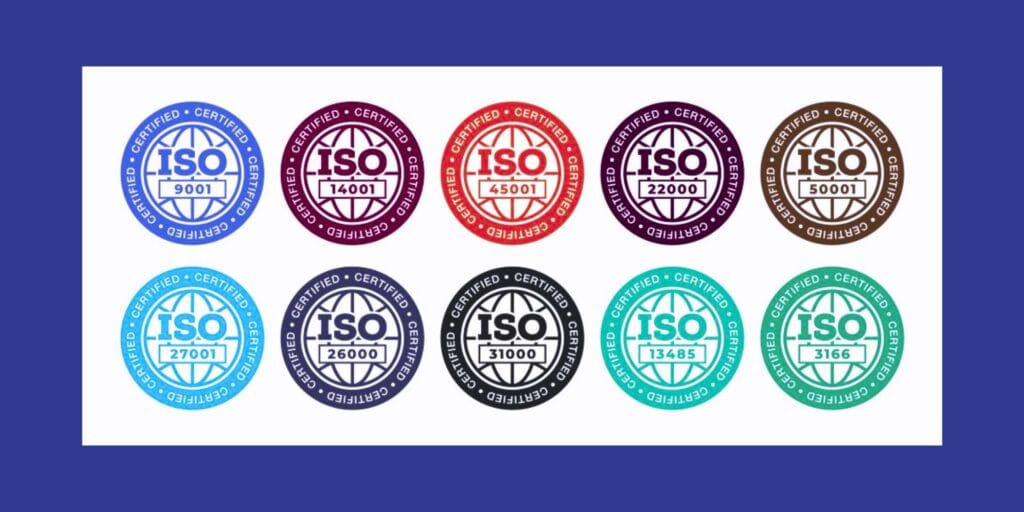
Several ISO standards have become particularly important across industries. ISO 9001 establishes requirements for quality management systems, ensuring consistent product and service quality through systematic processes, customer focus, and continuous improvement. This is the most widely adopted ISO standard globally with over one million certified organizations.
ISO 14001 specifies environmental management system requirements, helping organizations minimize environmental impacts, comply with regulations, and achieve sustainability objectives. This standard has become essential for companies facing environmental scrutiny, operating in regulated industries, or pursuing green credentials. Moreover, ISO 14001 certification demonstrates tangible environmental commitment that stakeholders increasingly expect.
ISO 45001 provides frameworks for occupational health and safety management, reducing workplace injuries, illnesses, and fatalities through systematic hazard identification, risk assessment, and preventive controls. Organizations prioritizing worker wellbeing and safety compliance pursue this certification to protect employees while demonstrating due diligence and legal compliance.
ISO 50001 addresses energy management, helping organizations improve energy efficiency, reduce costs, and decrease carbon emissions. As energy costs rise and climate commitments intensify, this standard attracts growing interest from energy intensive industries and organizations with sustainability targets. Additionally, ISO 27001 covers information security management, critical for businesses handling sensitive data, while ISO 22000 specifies food safety management requirements essential for food industry organizations.
Global Regulatory and Market Drivers
Regulatory environments worldwide increasingly reference or align with ISO standards. The European Union incorporates ISO standards into various directives and regulations covering product safety, environmental protection, and occupational health. Therefore, ISO certification often simplifies EU market access and regulatory compliance for non European companies.
United States operational compliance frameworks, particularly in regulated industries like aerospace, medical devices, and defense, frequently reference ISO standards. Quality management systems aligned with ISO 9001 satisfy many FDA and aerospace industry requirements. Similarly, environmental and safety programs based on ISO 14001 and ISO 45001 demonstrate regulatory due diligence to enforcement agencies.
Asia Pacific markets, particularly China, Japan, Korea, and Southeast Asian countries, place high value on quality certifications. ISO 9001 certification is often expected or required for businesses operating in these markets. Furthermore, GCC (Gulf Cooperation Council) countries including UAE, Saudi Arabia, Qatar, and others have rapidly adopted ISO standards as business excellence benchmarks. Government entities and major private sector organizations throughout the GCC increasingly require ISO certification from suppliers and partners.
Why ISO Certification Is Critically Important for Businesses in 2026
Strengthening Market Confidence and Customer Trust
ISO certification provides independent verification of your management system quality and capability. Customers making significant purchasing decisions want assurance that suppliers can consistently deliver quality products and services. Certification demonstrates your commitment through tangible evidence rather than marketing claims alone. Therefore, ISO certification builds trust that translates to customer confidence and business growth.
In competitive tenders and requests for proposals, ISO certification often serves as qualifying criteria. Organizations without relevant certifications may be automatically excluded from consideration regardless of other strengths. Moreover, certified companies typically score higher in supplier evaluation processes, improving win rates and contract values. Consequently, certification directly impacts revenue opportunities and market position.
Brand reputation benefits substantially from ISO certification. Organizations known for quality, environmental responsibility, or safety leadership attract better customers, employees, and partners. Furthermore, certification provides credible evidence supporting marketing messages and corporate positioning. In markets where competitors are certified, lacking certification creates competitive disadvantage and raises questions about your commitment to excellence.
Improving Operational Performance and Efficiency
ISO management systems drive operational improvements through structured approaches to process management. Documenting procedures, measuring performance, and implementing corrective actions naturally lead to greater efficiency and consistency. Therefore, many organizations discover that certification efforts yield significant cost savings through waste reduction, error prevention, and productivity gains.
Quality management systems based on ISO 9001 reduce defects, rework, and customer complaints. When processes are clearly defined, monitored, and continuously improved, quality becomes predictable rather than variable. Similarly, environmental management systems following ISO 14001 often identify resource efficiency opportunities that reduce waste, energy consumption, and disposal costs while improving environmental performance.
Risk management improves dramatically through ISO frameworks requiring systematic hazard identification, risk assessment, and preventive action. For example, ISO 45001 occupational health and safety systems prevent workplace injuries and illnesses that create human suffering, productivity loss, and liability costs. Additionally, ISO 27001 information security systems protect against data breaches and cyber incidents that threaten business continuity and reputation.
Supporting ESG and Sustainability Strategies
Environmental, Social, and Governance reporting and performance have become central to corporate strategy. Investors managing trillions of dollars evaluate companies based on ESG metrics, and management system certifications provide concrete evidence of ESG commitment. Therefore, ISO certifications directly support ESG objectives while providing frameworks for measurable improvement.
ISO 14001 environmental management certification demonstrates environmental stewardship through systematic impact reduction. This standard addresses key ESG concerns including carbon emissions, resource consumption, waste generation, and regulatory compliance. Furthermore, ISO 14001 provides structured processes for setting environmental objectives, tracking progress, and demonstrating continuous improvement that ESG frameworks require.
ISO 45001 occupational health and safety certification addresses the social dimension of ESG by demonstrating worker wellbeing commitment. Systematic safety management reduces incidents while creating positive workplace cultures. Moreover, ISO standards emphasizing ethical conduct, stakeholder engagement, and transparent governance align with broader ESG expectations from investors and civil society.
Meeting Customer Qualification and Supplier Requirements
Business to business customers increasingly require suppliers to maintain relevant ISO certifications as qualification prerequisites. Major corporations implementing supply chain sustainability and quality programs cascade these requirements throughout their vendor networks. Without certification, suppliers may be excluded from approved vendor lists regardless of product quality or pricing competitiveness.
Qualification questionnaires and supplier audits commonly assess management system certifications. ISO certification satisfies many assessment criteria automatically, reducing qualification complexity and accelerating approval processes. Furthermore, certified suppliers face less frequent or intensive customer audits because certification provides independent verification of management system adequacy.
Long term supply relationships increasingly depend on demonstrating continuous improvement and systematic management. ISO certification signals that your organization takes quality, environmental responsibility, or safety seriously with structured approaches rather than ad hoc reactions. Consequently, certification strengthens customer relationships and positions your organization as preferred supplier rather than merely acceptable alternative.

Addressing Global Regulatory and Legal Compliance
While ISO standards are voluntary, regulatory frameworks worldwide increasingly reference them as compliance benchmarks. Organizations certified to relevant ISO standards often find regulatory compliance easier because their management systems already address many regulatory requirements systematically. For example, ISO 14001 environmental management systems help ensure compliance with environmental laws and regulations across jurisdictions.
Legal liability risks decrease when organizations implement systematic management approaches. ISO 45001 occupational health and safety systems demonstrate due diligence in protecting workers, which can mitigate legal consequences if incidents occur. Similarly, ISO 27001 information security systems show reasonable data protection efforts relevant to privacy regulations like GDPR. Therefore, certification provides legal risk management benefits beyond operational improvements.
Export markets present complex regulatory landscapes that can overwhelm organizations unfamiliar with destination country requirements. ISO certification simplifies international trade by providing recognized proof of management system quality that regulators and customs authorities worldwide understand and accept. Moreover, certification reduces non tariff barriers that might otherwise impede market access.
Responding to Growing Industry Wide Adoption
ISO certification adoption has reached critical mass in many industries. When competitors are certified and customers expect certification, remaining uncertified becomes increasingly difficult. Industry norms evolve such that certification transforms from competitive advantage to baseline expectation. Therefore, organizations must pursue certification not just for benefits but to avoid competitive disadvantage.
Industry associations and professional bodies increasingly promote or require ISO certification among members. Sector specific standards often build upon ISO frameworks, making ISO certification logical first steps toward specialized certifications. Furthermore, insurance providers may offer premium reductions for certified organizations due to demonstrated risk management, creating financial incentives for certification.
Talent acquisition and retention benefit from ISO certification in unexpected ways. Professionals prefer working for well managed organizations with systematic approaches to quality, safety, and environmental responsibility. Therefore, certification helps attract skilled employees while demonstrating organizational maturity that supports career development and job satisfaction.
The ISO Certification Process
Gap Assessment and Initial Review
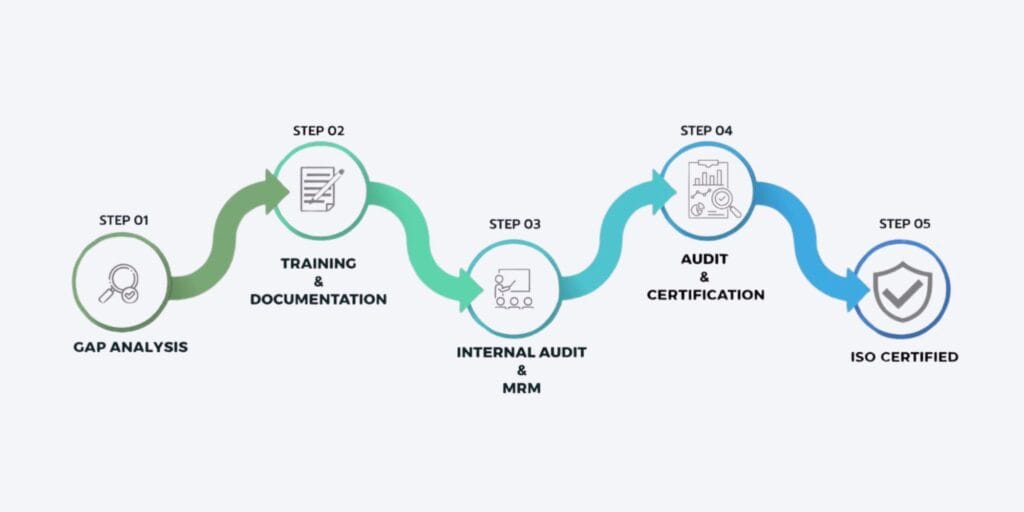
The certification journey begins with comprehensive gap assessment comparing current practices against relevant ISO standard requirements. This evaluation examines existing policies, procedures, documentation, processes, and records to identify what already complies and what requires development or improvement. Therefore, gap assessment provides clear roadmap outlining necessary actions, realistic timelines, and resource requirements.
During gap assessment, I review your operations through documentation examination, facility walkthroughs, and interviews with key personnel. This thorough evaluation covers all standard clauses and requirements, assessing both documentation and actual implementation. Additionally, I evaluate organizational culture, management commitment, and change readiness because successful certification requires more than paperwork.
Gap assessment results are documented in detailed findings report identifying compliant areas, gaps requiring attention, recommendations for system development, and prioritized action plan. This report becomes the foundation for certification project planning, resource allocation, and milestone tracking. Moreover, realistic gap assessment prevents surprises later by setting accurate expectations from the outset.
Defining System Boundaries and Scope
ISO management systems must have clearly defined scope specifying what activities, locations, products, or services are included. Scope definition involves strategic decisions about certification breadth and boundaries. For example, multi site organizations may initially certify one location before expanding, or companies with diverse services may certify core offerings before including peripheral activities.
Scope decisions affect certification complexity, cost, audit duration, and business value. Broader scope provides greater market credibility but requires more extensive system implementation and documentation. Conversely, narrower scope simplifies initial certification but may limit business applications. Therefore, scope definition requires balancing ambition with practical feasibility while ensuring meaningful business benefit.
Exclusions and limitations must be clearly justified and documented. ISO standards allow specific exclusions when requirements genuinely do not apply to your operations. However, inappropriate exclusions can result in certification rejection or reduced credibility. I help organizations define appropriate scope that accurately represents operations while meeting standard requirements and business objectives.
Documentation and Policy Development
ISO certifications require documented management systems including policies, procedures, work instructions, and forms. The documentation extent depends on organizational size, complexity, and chosen standard. However, all certified organizations need certain core documents including quality, environmental, or safety policy statements; documented procedures for required processes; work instructions for critical activities; and forms for recording evidence of system operation.
Documentation development begins with high level policies demonstrating management commitment to relevant objectives whether quality, environmental responsibility, safety, or other focuses. Policies must align with organizational context, stakeholder expectations, and standard requirements. Therefore, effective policies are concise, meaningful statements rather than generic boilerplate copied from templates.
Detailed procedures specify how processes are planned, executed, monitored, and improved. Procedures must reflect actual practices rather than aspirational ideals that employees ignore in daily work. Consequently, I develop documentation collaboratively with staff who implement processes, ensuring procedures are practical, clear, and useful rather than merely satisfying auditors. Moreover, documentation should enhance rather than burden operations through clarity, accessibility, and appropriate detail levels.
Training and Implementation Support
Successful ISO implementation requires comprehensive staff training covering standard requirements and expectations; management system policies and procedures; individual roles and responsibilities; documentation and record keeping requirements; and improvement opportunities and change management. Training ensures everyone understands not just what must be done but why it matters and how it benefits the organization.
Implementation support translates documented systems into operational reality. This involves piloting procedures in actual work environments, refining approaches based on practical experience, establishing measurement and monitoring systems, creating habits and disciplines supporting long term compliance, and building organizational culture embracing continuous improvement. Therefore, implementation is change management process requiring leadership, communication, and patience.
Common implementation challenges include resistance to documentation, competing operational priorities, insufficient management support, and inadequate resources. I help organizations navigate these challenges through phased approaches, quick wins demonstrating value, and sustained communication emphasizing benefits. Moreover, involving staff in system development and improvement builds ownership essential for lasting success beyond initial certification.
Internal Audit and Corrective Actions
Before engaging certification bodies, organizations must conduct internal audits verifying management system implementation and effectiveness. Internal audits systematically review all standard clauses, examining documentation completeness, procedure implementation, record adequacy, and overall system performance. These audits simulate certification audits, identifying issues requiring correction before external scrutiny.
Internal auditors require training in audit techniques, standard requirements, and organizational processes. I provide internal auditor training equipping your staff to conduct effective audits. Additionally, I can conduct initial internal audits demonstrating proper techniques while identifying non conformances requiring attention. This combination of training and practical demonstration builds internal audit capability supporting ongoing compliance.
Non conformances identified during internal audits must be addressed through corrective actions eliminating root causes rather than merely treating symptoms. Effective corrective actions investigate why problems occurred, implement changes preventing recurrence, and verify effectiveness through monitoring. Therefore, corrective action processes drive continuous improvement while preparing organizations for certification audit success. Moreover, demonstrated corrective action capability impresses certification auditors and strengthens overall management system maturity.
Certification Audit and Ongoing Support
Certification audits are conducted by independent, accredited certification bodies that verify management system compliance with ISO standards. Audits typically occur in two stages. Stage 1 reviews documentation readiness and system adequacy. Stage 2 evaluates implementation through document review, interviews, process observation, and record examination. Successful completion results in certificate issuance valid for three years subject to annual surveillance audits.
I support certification audit preparation by assembling documentation packages, briefing staff on audit expectations and techniques, coordinating logistics with certification bodies, and conducting mock audits building confidence. During audits, I can participate in opening and closing meetings, support auditor questions, and help clarify procedures. This guidance reduces stress while demonstrating professionalism that facilitates smooth audit processes.
Surveillance audits occur annually throughout certificate validity, verifying continued compliance and system improvement. Recertification audits at three year intervals comprehensively reassess entire management systems. Therefore, certification represents ongoing commitment rather than one time achievement. I provide continued support ensuring systems remain compliant, documentation stays current, and your organization maximizes certification value through continuous improvement.

Why Achieving ISO Certification Internally Is Difficult
Documentation Overload and System Complexity
ISO standards require comprehensive documentation covering policies, objectives, procedures, work instructions, and records. For organizations without existing management systems, creating this documentation from scratch is overwhelming. Determining appropriate detail levels, ensuring consistency across documents, and maintaining documentation as operations evolve challenges even experienced quality professionals.
Documentation must balance completeness with practicality. Excessive documentation creates administrative burden that staff resists, while insufficient documentation fails to guide operations or satisfy auditors. Therefore, achieving optimal documentation requires experience understanding what auditors expect, what staff will actually use, and how to create living documents that support rather than hinder work.
Many organizations underestimate documentation time and effort required. Writing clear procedures demands understanding processes deeply, consulting subject matter experts, drafting multiple iterations, and obtaining approvals. Multiply this across dozens of required procedures and the workload becomes significant. Consequently, certification projects stall when internal resources prove inadequate for documentation demands.
Understanding ISO Clause Requirements and Interpretation
ISO standards contain numerous clauses with specific requirements using precise terminology. Understanding what each clause requires and how requirements apply to your specific operations demands careful study and interpretation. For example, ISO 9001 clause 8.5.1 addresses production and service provision control, but determining exactly what controls your organization needs requires expertise and judgment.
Standards use terms like “shall,” “should,” and “can” with specific meanings indicating mandatory requirements, recommendations, and permissions respectively. Misinterpreting these distinctions leads to incomplete systems that fail certification audits. Moreover, standards reference normative documents and use technical vocabulary unfamiliar to people without quality management backgrounds. Therefore, proper standard interpretation requires training, experience, or external expertise.
Different industries and organizational types apply ISO requirements differently. Manufacturing companies implement production controls differently than service organizations. Small businesses may use simplified approaches while large corporations need more elaborate systems. Consequently, generic templates or one size fits all approaches often prove inadequate, requiring customization that inexperienced internal teams struggle to achieve.
Internal Resource Limitations and Competing Priorities
Achieving ISO certification typically requires 6 to 12 months of focused effort depending on organizational size, complexity, and starting point. For small and medium enterprises with limited staff, dedicating hundreds of hours to system development, documentation, training, and audit preparation while maintaining normal operations is extremely challenging. Therefore, certification initiatives frequently stall due to resource constraints and competing priorities.
Certification requires cross functional involvement including operations, quality, safety, environmental, human resources, and management. Coordinating these functions, scheduling meetings, obtaining input, and maintaining momentum demands project management skill and authority. Moreover, when the certification champion lacks seniority or organizational backing, projects lose momentum as operational crises take precedence.
The opportunity cost of internal certification efforts is substantial. Time spent on ISO system development cannot be devoted to sales, production, customer service, or other revenue generating activities. For lean organizations operating at capacity, finding spare resources for certification projects proves difficult without external support or temporary resource augmentation through consultants.
Audit Preparation Challenges and Certification Body Selection
Preparing for certification audits involves assembling comprehensive documentation, ensuring all procedures are implemented, training staff on audit responses, conducting mock audits, and coordinating logistics. Organizations unfamiliar with certification audits often underestimate preparation requirements or prepare inadequately, leading to failed audits, major non conformances, and delayed certification.
Selecting appropriate certification bodies represents another challenge. Hundreds of accredited certification bodies operate globally with varying reputations, costs, audit approaches, and industry expertise. Choosing unsuitable certification bodies can result in problematic audit experiences, delayed certification, or certificates lacking credibility in your target markets. Therefore, certification body selection requires research and experience that internal teams typically lack.
Audit anxiety and stress affect many organizations, particularly during initial certification attempts. Staff worry about saying wrong things, auditors discovering problems, or projects failing after months of effort. This anxiety can undermine performance during audits or create resistance to entire certification initiatives. Consequently, experienced consultants who normalize audit processes and build confidence provide significant value beyond technical expertise.
Maintaining Compliance and System Effectiveness Over Time
Achieving initial certification is challenging, but maintaining compliance over years proves equally demanding. Management systems require ongoing attention including regular internal audits, management reviews, continuous improvement, corrective action follow through, and documentation updates. Organizations often struggle maintaining this discipline after certification excitement fades and competing priorities emerge.
Staff turnover creates compliance risks when trained employees leave and replacements lack management system knowledge. Without systematic onboarding and training, new employees may deviate from established procedures, creating non conformances discovered during surveillance audits. Therefore, organizations need sustainable approaches to training, knowledge transfer, and culture maintenance that withstand personnel changes.
Systems become outdated as operations evolve, technologies change, and business contexts shift. Documentation must be updated reflecting current practices, or gaps emerge between documented and actual procedures. Many organizations discover during surveillance audits that their management systems no longer reflect operational reality, resulting in non conformances and potential certificate suspension. Consequently, maintaining certification requires ongoing commitment extending well beyond initial achievement.
How I Support Clients as a Freelancing Sustainability Consultant
My Experience and Background
I hold a Master of Science degree in Environmental Science, providing comprehensive training in environmental management systems, sustainability frameworks, quality assurance methodologies, and systematic approaches to organizational improvement. This academic foundation ensures I understand not only ISO certification mechanics but also the underlying management principles and systems thinking that make certifications meaningful and effective.
With more than four years of professional sustainability experience based in Dubai and supporting international clients, I have developed practical expertise guiding organizations through ISO certification across multiple standards. My experience spans ISO 9001 quality management, ISO 14001 environmental management, ISO 45001 occupational health and safety, and other management system standards. Therefore, I bring both theoretical knowledge and real world problem solving ability to every certification project.
Beyond ISO certification, my expertise includes life cycle assessment, Environmental Product Declarations, greenhouse gas inventories, carbon footprinting, EcoVadis assessments, sustainability reporting, and comprehensive ESG strategy development. This breadth means I understand how ISO certifications fit within broader sustainability initiatives and can help organizations integrate management systems rather than creating isolated compliance silos.
International and Regional Expertise
I have supported clients across diverse geographical contexts including the United Arab Emirates and broader GCC region, European markets, United States and Canada, Australia and New Zealand, and various Asia Pacific countries. This international experience has given me familiarity with regional variations in regulatory requirements, market expectations, certification body practices, and business cultures.
Understanding regional contexts is essential for effective ISO implementation. For example, GCC organizations often face specific regulatory requirements from government entities and free zones. European companies must align environmental management with EU regulations. North American organizations navigate different occupational safety frameworks. Therefore, my international experience ensures ISO systems meet both standard requirements and regional business realities.
Working remotely with global clients has refined my ability to deliver professional consulting services across time zones, languages, and cultural contexts. I am experienced with virtual audits, online training delivery, and digital collaboration tools that keep certification projects moving efficiently regardless of geographical separation. Moreover, my communication style adapts to different business cultures while maintaining clarity and professionalism.
Tailored Support for Small and Medium Enterprises
Large corporations can afford major consultancies with teams of specialists and extensive resources. However, small and medium enterprises need different service models offering high quality expertise delivered efficiently at reasonable cost. I specialize in making ISO certification accessible to SMEs by streamlining processes, focusing on practical solutions, and providing hands on support that respects resource constraints.
My approach recognizes that SMEs often have lean operations where employees handle multiple functions. Therefore, I design management systems that are straightforward, well documented, and easy to maintain without dedicated compliance specialists. Documentation is practical and user friendly rather than academic exercises satisfying only auditors. Procedures reflect operational reality and actually support daily work.
Communication style matters significantly for SMEs where decision makers may lack technical backgrounds in quality management or environmental systems. I use plain language rather than ISO jargon, ensure concepts are clearly explained, and involve clients in decisions rather than imposing standardized solutions. Consequently, SME clients understand their management systems, can maintain them independently, and gain lasting value beyond certificates on walls.
Practical and Clear Consulting Approach
I take an educational consulting approach, building client understanding and internal capability rather than creating dependency on external experts. Throughout certification projects, I explain not just what must be done but why requirements exist and how they benefit your organization. This knowledge transfer empowers your team to maintain systems confidently after my engagement ends.
My consulting philosophy emphasizes practical implementation over theoretical perfection. Management systems must function in real operational environments with actual constraints, imperfect data, and busy staff. Therefore, I design systems that are compliant yet pragmatic, meeting standard requirements while remaining achievable and sustainable for your organization. Moreover, I focus on quick wins and visible benefits that build momentum and demonstrate value early in certification journeys.
Collaboration defines my consulting relationships. Rather than dictating solutions, I work with your team to understand operations, identify challenges, and develop approaches that fit your organizational culture and capabilities. This collaborative approach ensures better solutions, stronger staff buy in, and more successful long term outcomes. Furthermore, clients appreciate being partners rather than passive recipients of consulting services.
Frequently Asked Questions
How long does a typical LCA project take?
Most LCA projects require 6 to 12 weeks from initiation to final report delivery. However, timelines depend significantly on product complexity and data availability. Simple products with readily available data may be completed in 6 to 8 weeks. Meanwhile, complex products requiring extensive supplier engagement or novel data collection may take 10 to 14 weeks. I provide realistic timeline estimates during initial consultations based on your specific situation.
What information do I need to provide for an LCA?
You will need to provide detailed information about your product and its life cycle. This typically includes product specifications and bill of materials, manufacturing process descriptions, energy and water consumption data, transportation and logistics information, packaging details, product use phase requirements if applicable, and end of life scenarios. I provide customized data collection templates that make gathering this information straightforward. Furthermore, I help prioritize data collection by identifying which information most significantly affects results.
Can LCA support multiple business needs simultaneously?
Absolutely. A well conducted LCA provides data that supports Environmental Product Declarations, product carbon footprint calculations and labels, greenhouse gas inventory Scope 3 reporting, sustainability reporting frameworks like GRI and CDP, green procurement responses, environmental marketing claims, and product improvement initiatives. Therefore, LCA represents a strategic investment with applications across marketing, procurement, reporting, and product development.
How much does LCA consultancy cost?
LCA project costs vary based on product complexity, data availability, study scope, and specific deliverables. Simple cradle to gate assessments for straightforward products typically start around a certain range, while comprehensive cradle to grave studies for complex products require larger investments. I provide transparent, fixed price quotes after understanding your specific needs during initial consultation. My pricing is structured to be accessible for small and medium enterprises while reflecting the specialized expertise required for credible LCA work.
Do I need LCA software to work with you?
No. I use professional LCA software as part of my consulting service, so you do not need to purchase licenses or learn complex tools. However, if your organization wants to develop internal LCA capability, I can provide training and support for software selection and implementation as an additional service.
Can LCA help reduce costs in addition to environmental impacts?
Frequently, yes. LCA often reveals inefficiencies that drive both environmental impact and costs. For example, identifying energy intensive process steps, material waste, or inefficient logistics can lead to improvements that benefit both sustainability and profitability. Therefore, LCA should be viewed not just as an environmental compliance exercise but as a strategic tool for operational excellence.
How is LCA different from a simple carbon footprint?
Carbon footprint focuses solely on greenhouse gas emissions, while LCA assesses multiple environmental impact categories including acidification, eutrophication, resource depletion, water use, and toxicity. Furthermore, comprehensive LCA provides richer insights for decision making because environmental challenges extend beyond climate change alone. However, LCA can certainly provide detailed carbon footprint analysis as one component of a broader environmental assessment.
Will my LCA be accepted internationally?
When conducted according to ISO 14040 and ISO 14044 standards, LCA studies are recognized globally. However, specific applications may have additional regional requirements. For instance, EPDs intended for European markets should follow EN 15804, while North American audiences may prefer different program operators. I ensure your LCA meets the requirements of your target markets, whether that is Europe, North America, Asia Pacific, or multiple regions simultaneously.
Contact Me to Begin Your Life Cycle Assessment Journey
Life cycle assessment provides the environmental intelligence modern businesses need to compete, comply, and lead in sustainability. Whether you are responding to customer requirements, preparing for new regulations, pursuing green building projects, or proactively managing environmental performance, LCA delivers credible insights that drive better decisions.
I invite you to reach out for a consultation. We can discuss your products, business objectives, and how LCA can support your goals. I will provide honest guidance on study scope, realistic timelines, and transparent pricing. There is no obligation, and the conversation will give you clarity on how life cycle assessment can benefit your organization.
Together, we can transform environmental data into strategic advantage. Contact me today to get started.
My ISO Certification Consultancy Scope of Work
Comprehensive Gap Assessment and Readiness Evaluation
I begin every ISO certification engagement with thorough gap assessment examining current practices against relevant standard requirements. This includes reviewing existing policies, procedures, and documentation; evaluating process maturity and control effectiveness; assessing documentation and record keeping systems; interviewing key personnel about current practices; and identifying compliance gaps and improvement needs.
Gap assessment results are documented in comprehensive findings report providing clear understanding of your starting point, specific actions required for certification readiness, realistic timeline estimates, and resource requirement projections. This report becomes project roadmap guiding all subsequent work. Moreover, transparent gap assessment prevents surprises and ensures realistic expectations from project outset.
ISO System Design and Documentation Development
I develop complete ISO management system documentation tailored to your operations and requirements. This includes high level policy statements demonstrating management commitment; documented procedures for all required processes; work instructions for critical activities; forms and templates for required records; and documentation control systems ensuring current versions are used.
Documentation is developed collaboratively with your team, ensuring procedures reflect actual operations and will be followed in daily work. I avoid generic templates that fail to represent your unique processes, instead creating customized documentation that adds value beyond satisfying auditors. Furthermore, documentation is written clearly in language your staff understands, formatted for easy reference, and designed to support operations rather than merely checking compliance boxes.
Process and Risk Assessment Support
ISO standards require organizations to understand their context, identify risks and opportunities, and address them systematically. I facilitate these assessments through stakeholder analysis identifying interested parties and their expectations; SWOT analysis examining strengths, weaknesses, opportunities, and threats; risk assessment identifying and evaluating potential problems; and opportunity identification revealing improvement possibilities.
Process mapping helps visualize workflows, identify control points, and ensure systematic management. I work with your team to document key processes, clarify responsibilities, establish performance metrics, and design monitoring approaches. Therefore, process understanding improves significantly during certification preparation, often revealing efficiency opportunities and quality improvements beyond certification scope.
Internal Audit Capability and Corrective Action Systems
Internal audit capability is essential for maintaining certification long term. I provide comprehensive internal auditor training covering audit principles and techniques, standard requirements and interpretation, audit planning and execution, finding documentation and reporting, and corrective action follow up. This training equips your staff to conduct effective audits independently.
Additionally, I conduct initial internal audits demonstrating proper techniques while identifying non conformances requiring correction. These audits simulate certification audits, building staff confidence and ensuring readiness. Findings are documented clearly with specific corrective action recommendations. Moreover, I support corrective action implementation, root cause analysis, and effectiveness verification preparing your organization for certification success.
Certification Body Coordination and Audit Support
Selecting appropriate certification bodies requires understanding accreditation, industry expertise, geographical coverage, audit quality, and cost. I help evaluate certification body options and coordinate engagement including quote comparison and selection support; scope negotiation and agreement; audit scheduling and logistics; and documentation package preparation.
During certification audits, I provide comprehensive support including staff briefing on audit expectations and techniques; documentation organization and presentation; participation in opening and closing meetings if desired; and response support for auditor questions. This guidance reduces stress, demonstrates professionalism, and facilitates smooth audit processes. Furthermore, my experience with numerous certification bodies and auditors ensures you understand what to expect and how to respond effectively.
Staff Training and Awareness Building
Successful implementation requires comprehensive training ensuring all staff understand management system requirements relevant to their roles. I provide customized training programs covering standard overview and business benefits; policy and procedure familiarization; individual responsibilities and accountabilities; documentation and record keeping requirements; and continuous improvement participation.
Training is delivered in formats matching your needs including in person workshops when geography permits, virtual training sessions for remote teams, video recorded modules for ongoing onboarding, and written materials for reference and reinforcement. Moreover, training emphasizes practical application rather than theoretical concepts, ensuring staff can actually implement requirements in daily work.
Continuous Improvement and Long Term Support
ISO certification is beginning rather than end of improvement journey. I help organizations establish continuous improvement cultures through performance measurement and monitoring systems; management review processes; corrective and preventive action disciplines; and objective setting and progress tracking. These approaches ensure your management system remains dynamic and valuable rather than static compliance exercise.
Beyond initial certification, I offer ongoing support including annual surveillance audit preparation; system updates reflecting operational changes; refresher training for existing staff; onboarding support for new employees; and recertification support at three year intervals. This flexible ongoing engagement ensures your certification remains current while building internal capability over time.
Why Choose Me for Your ISO Certification Needs
Reliable and Responsive Support Across Global Operations
As an independent consultant, I serve clients worldwide without geographical limitations or time zone constraints. My remote work model means expert ISO certification support is accessible regardless of your location. Whether you are in Dubai, Europe, North America, Asia Pacific, or elsewhere, I provide the same high quality, responsive service tailored to your regional requirements and business context.
Remote collaboration eliminates travel costs and scheduling friction while enabling efficient project management. I am experienced with virtual audits, online training delivery, and digital documentation systems that keep certification projects moving forward smoothly. Moreover, my flexible availability accommodates different working patterns and urgent timelines when business opportunities require accelerated certification.
Communication is prioritized throughout every engagement. You receive regular progress updates, prompt responses to questions, and proactive flagging of issues requiring attention. Therefore, you remain informed and involved throughout certification journeys without unpleasant surprises.
Strong Technical Expertise Across Multiple ISO Standards
My expertise spans the most commonly sought ISO standards including ISO 9001 quality management systems, ISO 14001 environmental management systems, ISO 45001 occupational health and safety systems, ISO 50001 energy management systems, ISO 27001 information security management, and ISO 22000 food safety management. This breadth enables integrated approaches when organizations pursue multiple certifications simultaneously.
Understanding how different standards relate and integrate creates efficiency opportunities. For example, ISO 14001 and ISO 45001 share common structure and many requirements, allowing parallel implementation. Similarly, quality management principles from ISO 9001 support all other management systems. Therefore, my cross standard expertise helps organizations maximize efficiency while building comprehensive management capabilities.
Beyond ISO certification, my sustainability expertise including LCA, carbon footprinting, ESG reporting, and broader environmental management means I understand how certifications connect to organizational sustainability strategies. Consequently, I help clients leverage ISO investments across multiple business applications rather than treating certification as isolated compliance exercise.
Affordable and Transparent Pricing for Small Businesses
My freelance model avoids the overhead costs associated with large consultancies, enabling competitive pricing that makes ISO certification accessible to small and medium enterprises. I provide clear, upfront pricing based on project scope so you know exactly what to expect without surprise fees or scope creep. Additionally, I offer flexible engagement options from comprehensive turnkey support to targeted assistance for specific certification challenges.
ISO certification represents strategic investment in operational excellence, market access, and business growth rather than pure compliance cost. Therefore, my pricing is structured to deliver strong return on investment through successful certification, improved operations, enhanced market opportunities, and maintained long term compliance. Moreover, compared to costs of lost business due to lacking certification, investment in professional certification support proves highly cost effective.
Payment structures can be tailored to organizational cash flow needs through milestone based payments, monthly retainers, or other arrangements. I work with small businesses to find affordable approaches that enable certification without financial strain. Consequently, ISO certification becomes achievable for organizations that might otherwise consider it financially out of reach.
Proven Results Across Industries and Regions
Having guided numerous organizations through successful ISO certification across manufacturing, services, construction, hospitality, and other sectors, I bring practical knowledge of what works in real world implementation. I understand common challenges, effective solutions, certification body expectations, and how to navigate complex situations that arise during certification journeys.
My track record includes successful first time certifications, efficient multi standard implementations, and certifications meeting aggressive business timelines. Clients appreciate my ability to deliver results on schedule while maintaining quality and building sustainable internal capabilities. Moreover, my approach focuses on certification success measured not just by receiving certificates but by creating management systems that genuinely improve operations and deliver business value.
References and testimonials from satisfied clients demonstrate consistent delivery of promised results. Organizations working with me achieve certification efficiently, understand their management systems, and maintain compliance successfully over time. Therefore, choosing my services means partnering with proven expertise that reliably delivers certification success.
Frequently Asked Questions
How long does ISO certification take?
Typical ISO certification timelines range from 6 to 12 months depending on organizational size, complexity, starting point, and chosen standard. Companies with existing management system foundations, strong documentation practices, and committed resources often achieve faster certification. However, organizations building systems from scratch or pursuing multiple standards simultaneously may require longer timelines. I provide realistic timeline estimates during initial consultations based on your specific situation.
What does ISO certification cost?
ISO certification costs include consultant fees, certification body audit fees, potential training expenses, and internal resource time. Total investment varies significantly based on organization size, standard complexity, and certification scope. Small businesses might invest certain amounts while larger organizations or multi site certifications require greater investment. I provide transparent cost estimates during gap assessment so you can budget appropriately. Moreover, certification delivers return on investment through improved efficiency, market access, and competitive advantage.
Can I pursue multiple ISO certifications simultaneously?
Yes, pursuing multiple ISO standards together is often efficient because many standards share common structures and requirements. For example, ISO 9001, ISO 14001, and ISO 45001 follow High Level Structure with identical clauses and similar approaches. Therefore, integrated management systems addressing multiple standards simultaneously reduce duplication and administrative burden. I specialize in integrated approaches that maximize efficiency while ensuring each standard’s specific requirements are properly addressed.
Do I need ISO certification if I am a small business?
ISO certification benefits organizations of all sizes, though motivations vary. Small businesses often pursue certification to qualify for customer contracts, access new markets, demonstrate credibility, or improve operations systematically. While certification requires investment, benefits typically outweigh costs through business opportunities that would otherwise remain inaccessible. Moreover, well implemented management systems help small businesses operate more efficiently and scale more easily. I help SMEs achieve certification affordably while ensuring meaningful business value.
What happens if we fail the certification audit?
Certification audits may identify non conformances requiring correction before issuing certificates. Minor non conformances typically allow conditional certificate issuance pending corrective action completion. Major non conformances require significant corrections and possible reassessment. However, thorough preparation through gap assessment, system development, internal audits, and corrective actions before certification audit minimizes failure risk. My approach includes comprehensive readiness verification ensuring high probability of first time certification success.
How do I maintain ISO certification after achieving it?
Maintaining ISO certification requires ongoing commitment including conducting regular internal audits, holding management reviews, implementing corrective actions, maintaining accurate records, and continuously improving systems. Annual surveillance audits by certification bodies verify continued compliance. Every three years, comprehensive recertification audits reassess entire management systems. I provide ongoing support options ensuring your organization maintains certification successfully while continuously improving operational performance.
Which ISO standard should I pursue first?
Priority depends on business drivers, customer requirements, regulatory context, and organizational risks. ISO 9001 quality management is most broadly applicable and often pursued first as foundation for other standards. ISO 14001 environmental management is critical for organizations with significant environmental impacts or operating in environmentally regulated sectors. ISO 45001 occupational health and safety matters most for high risk operations. I help evaluate your situation and recommend appropriate starting points aligned with business objectives.
Can you support certifications in different countries?
Yes, I support ISO certification for organizations operating anywhere globally. ISO standards are internationally recognized, and my experience spans multiple regions including Middle East, Europe, North America, and Asia Pacific. I understand regional regulatory contexts, certification body practices, and market expectations in different geographical areas. Therefore, whether you operate in single country or across multiple regions, I can guide certification processes meeting all relevant requirements.
Contact Me to Begin Your ISO Certification Journey
ISO certification provides structured pathways to operational excellence, market credibility, and competitive advantage. Whether you are responding to customer requirements, pursuing new business opportunities, improving organizational efficiency, or demonstrating commitment to quality, safety, or environmental responsibility, ISO certification delivers measurable benefits that strengthen your business.
I invite you to reach out for a consultation. We can discuss your business context, certification objectives, and how ISO standards can support your goals. I will provide honest assessment of certification suitability, realistic timeline and cost estimates, and clear explanation of what certification involves. There is no obligation, and the conversation will give you clarity on your options and next steps.
Together, we can build management systems that not only achieve certification but genuinely improve your operations and position your organization for sustainable success. Contact me today to get started on your ISO certification journey.
Danushka Prabhad Freelance Sustainability Consultant EcoVadis Consultancy | Sustainability Management Systems | GHG Reporting | ESG Consulting
Need sustainability support for your business?
I’m here to help you plan, measure, and grow responsibly.
Click below to get in touch or message me directly.
I’m Danushka Prabhad, a sustainability consultant with a M.Sc.’s in Environmental Science. I partner with businesses globally to turn ESG goals into practical action. From carbon footprint assessments to structured sustainability management systems, I help organizations build strategies that create lasting impact. My work is rooted in clarity, science, and real-world results — because sustainability shouldn’t be just an idea, but a measurable, strategic advantage.